Project Overview:
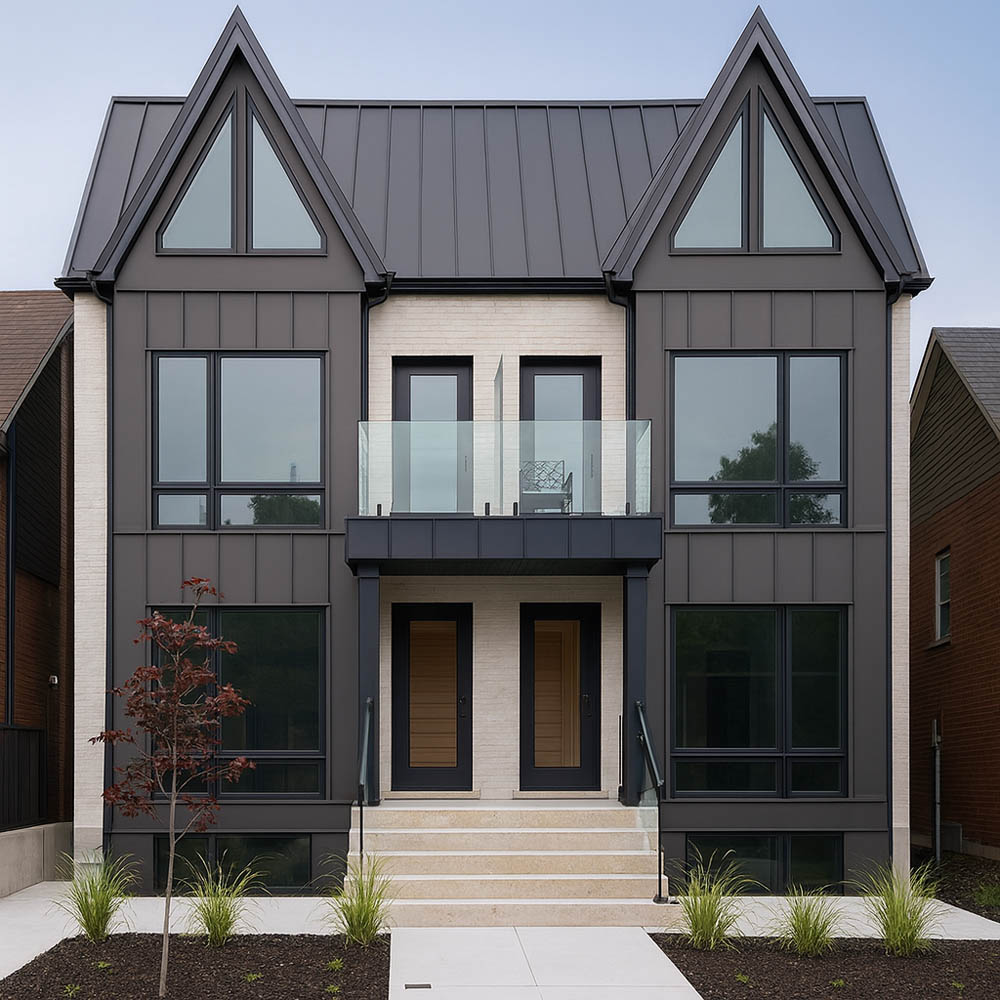
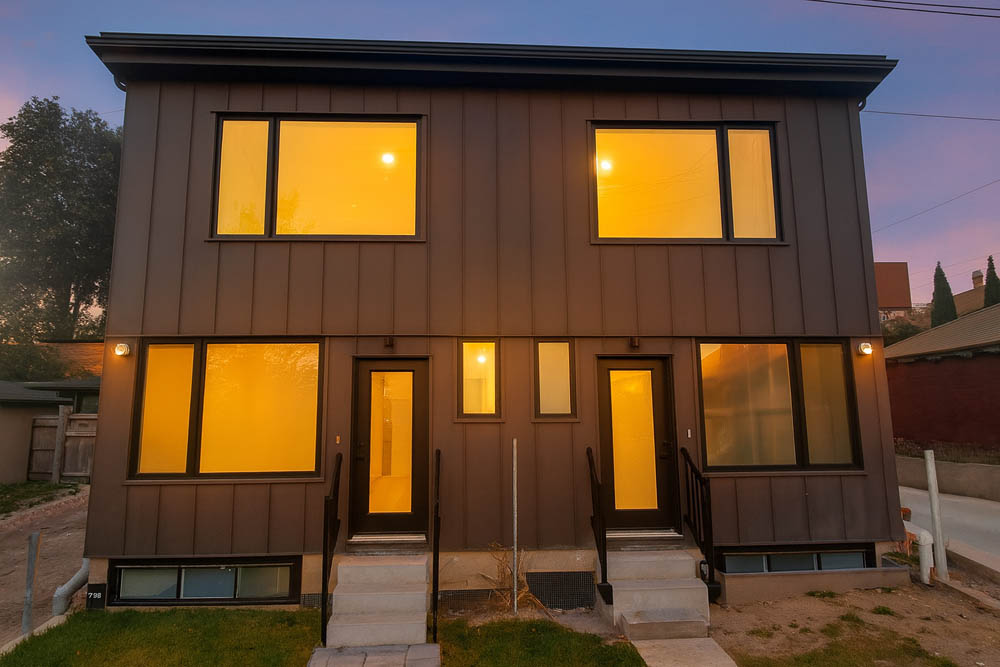
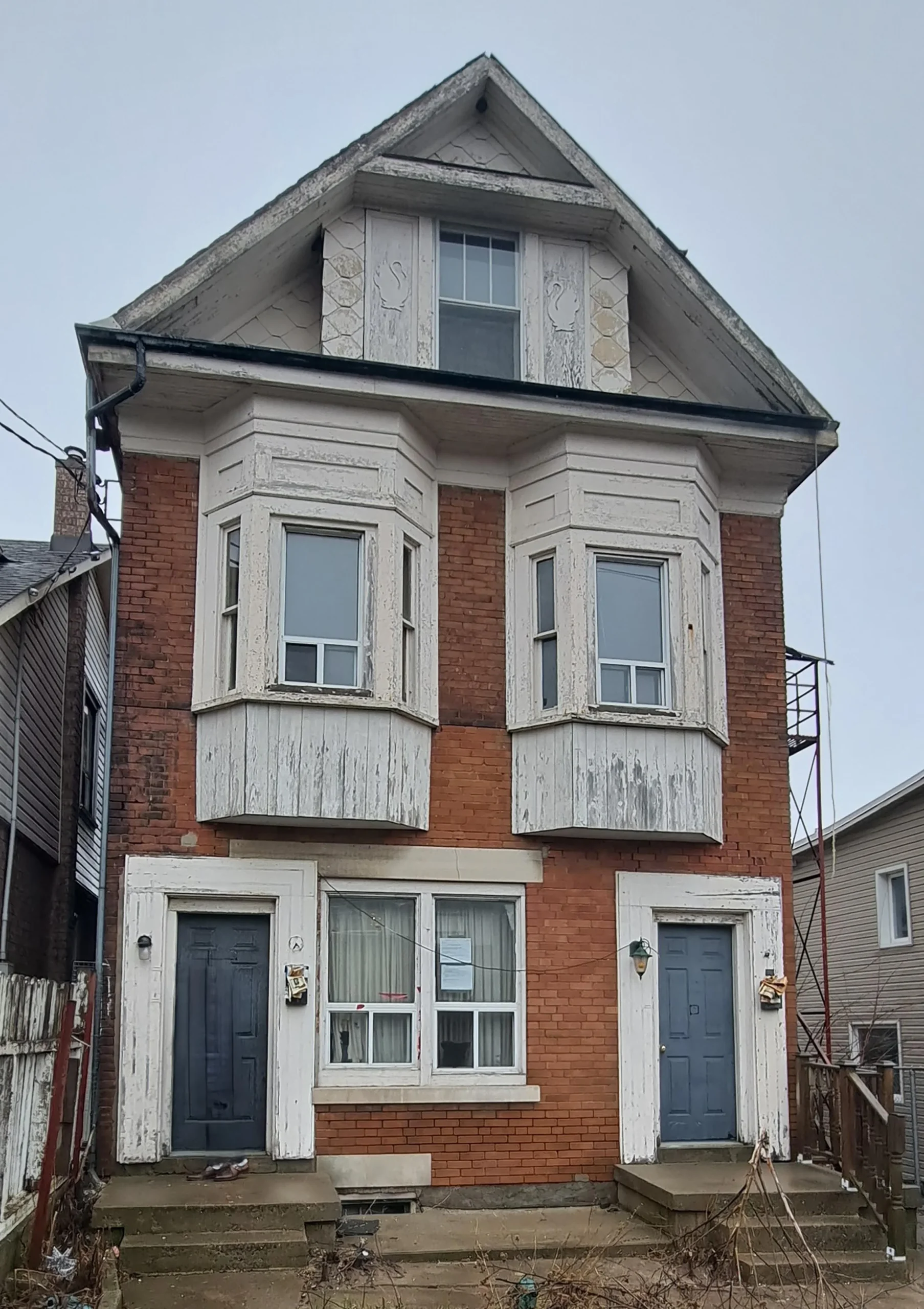
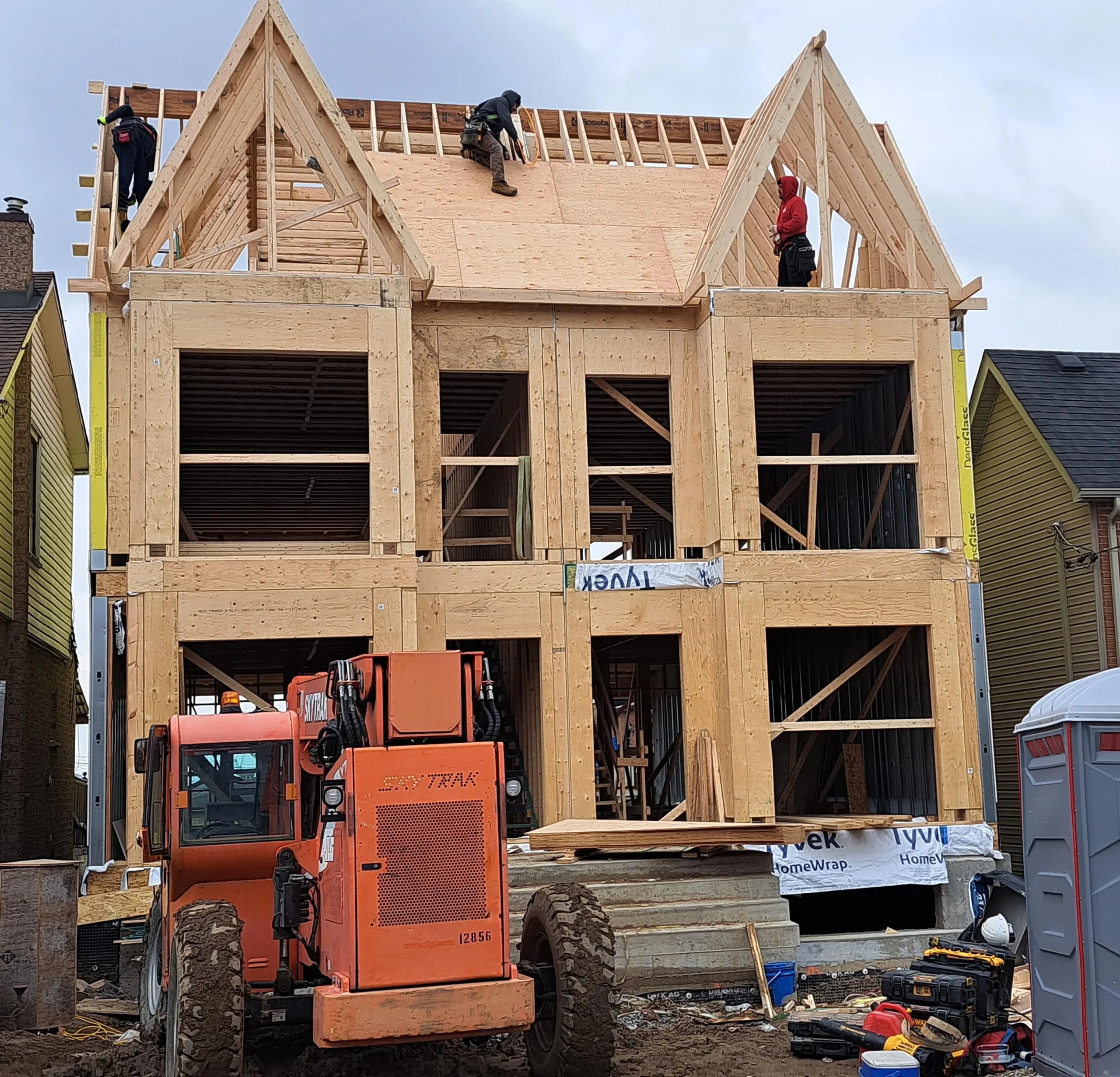
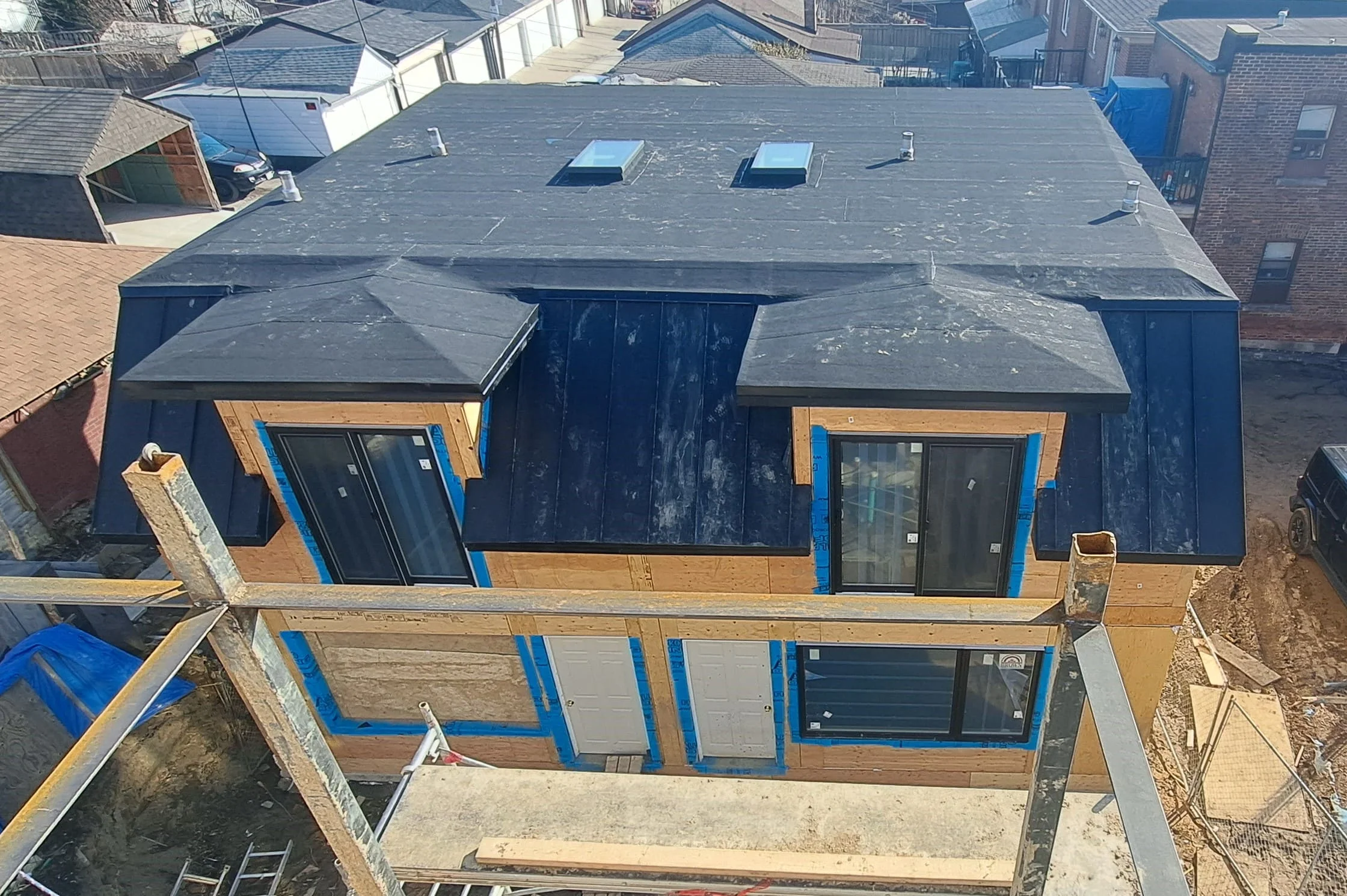
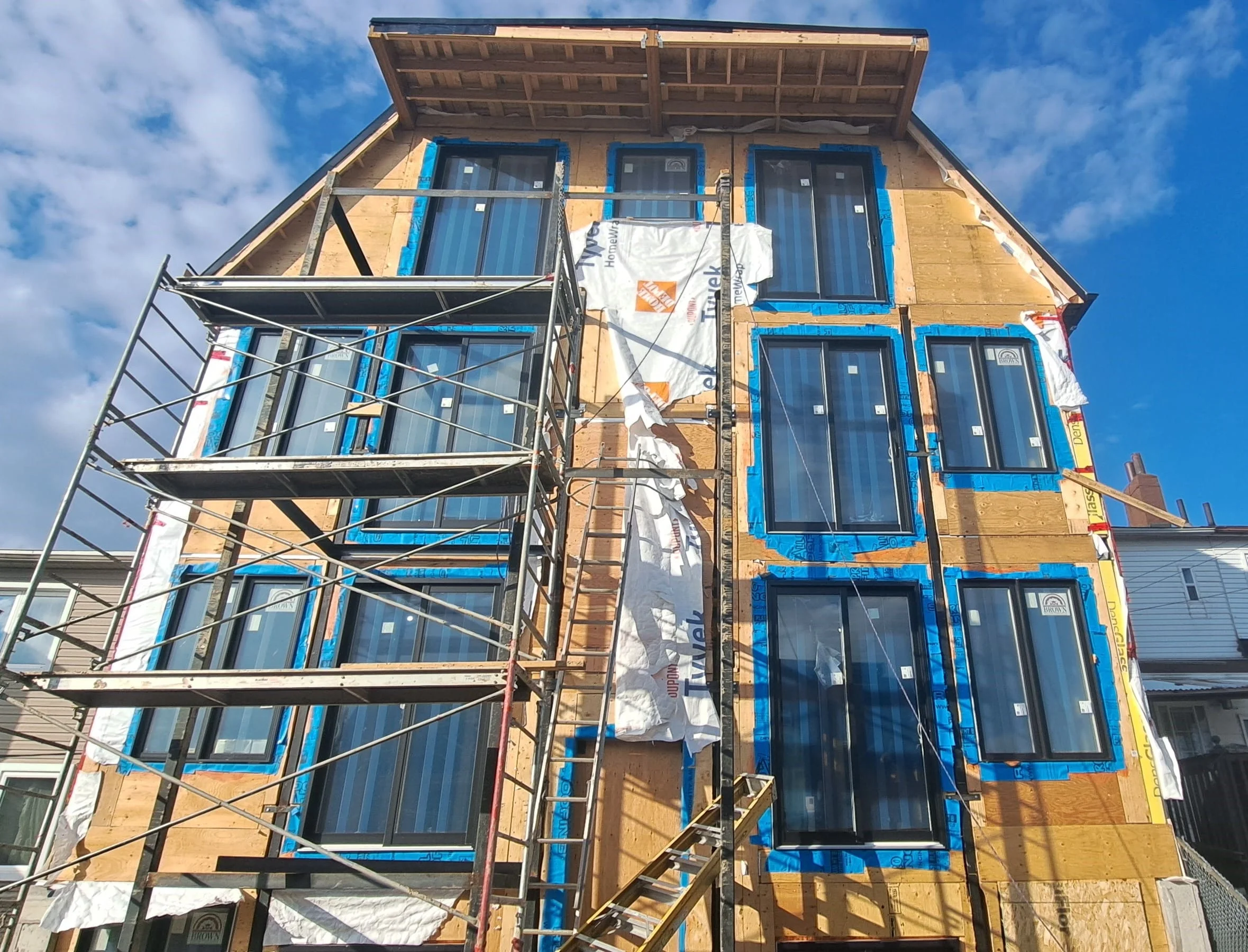
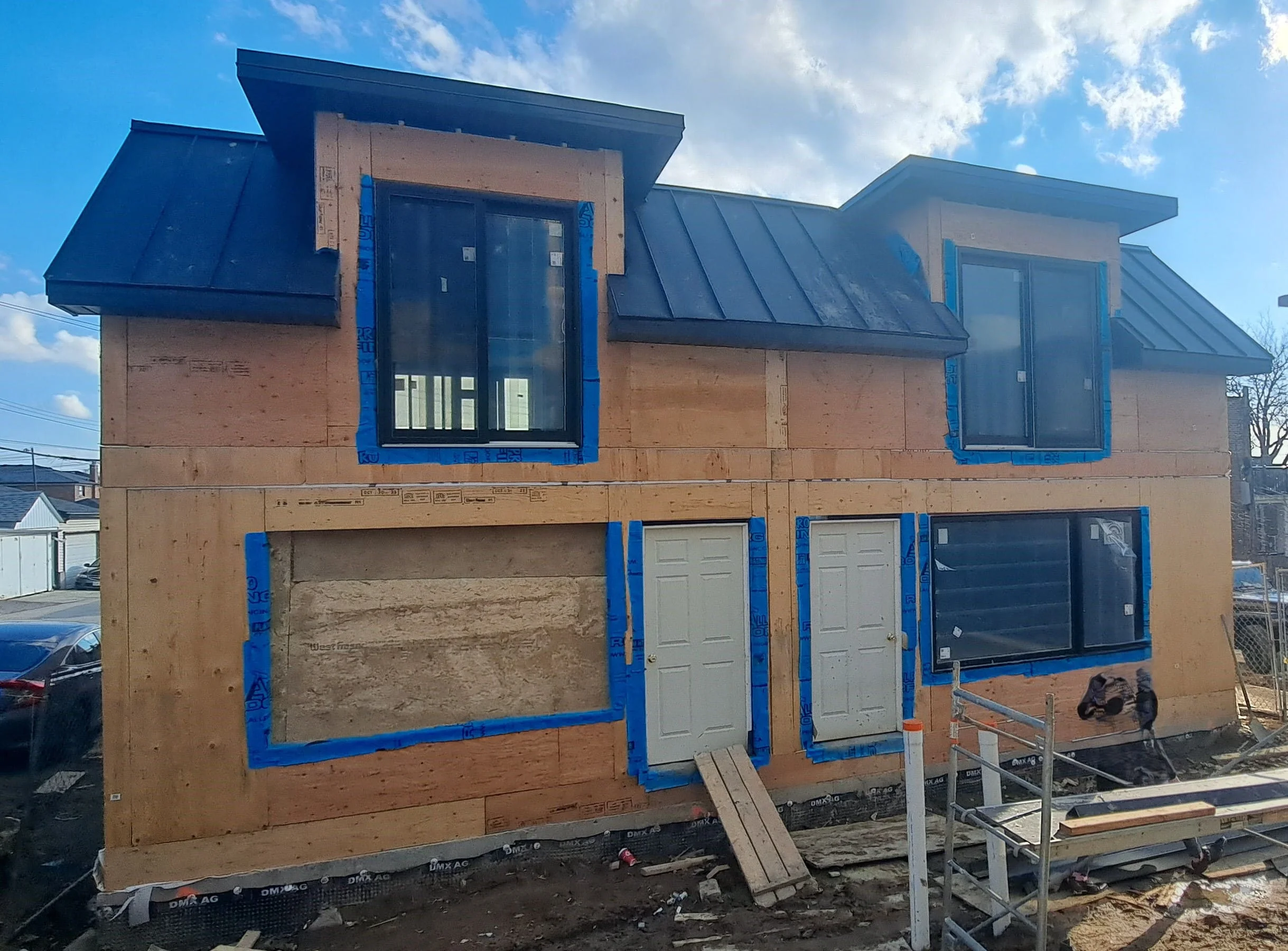
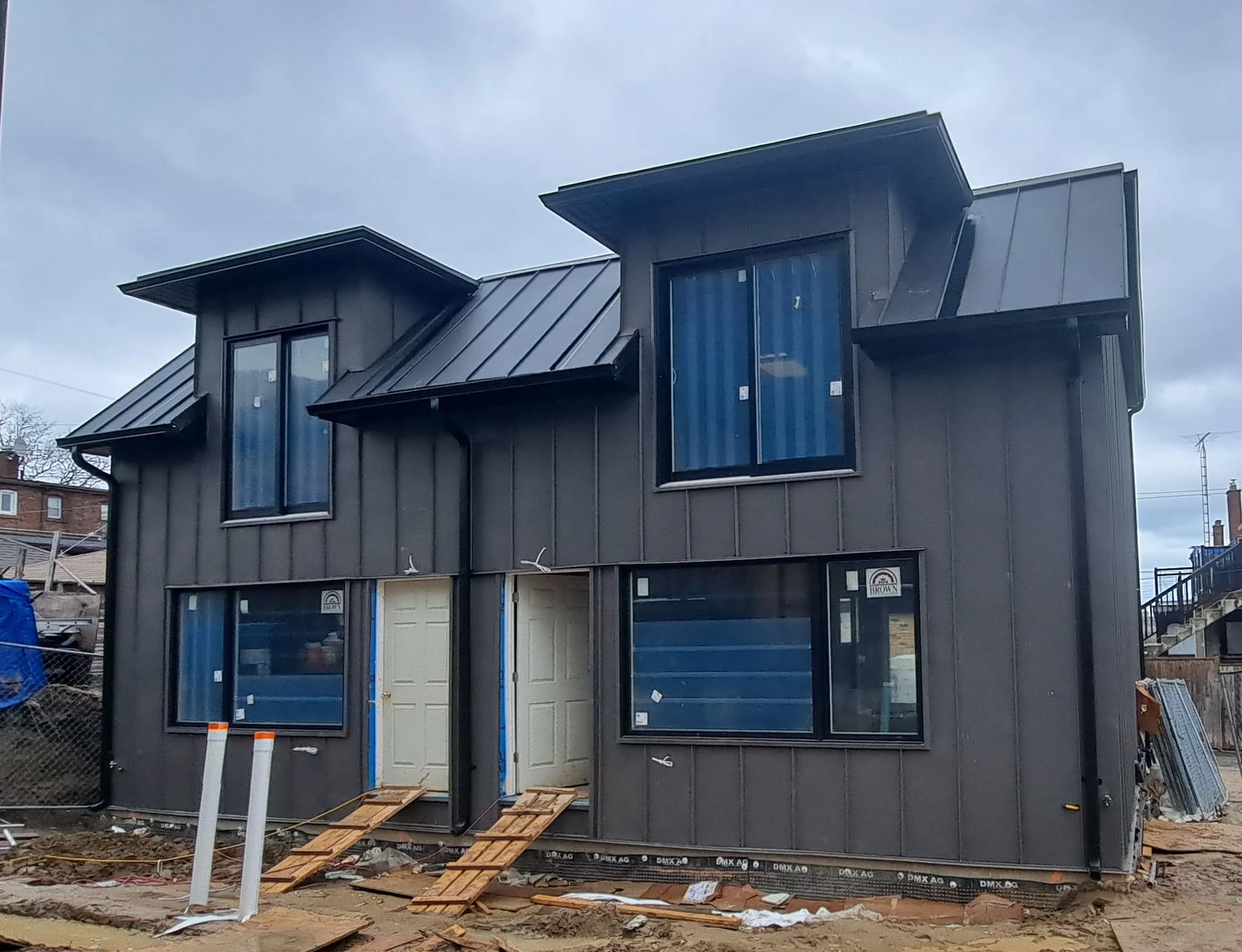
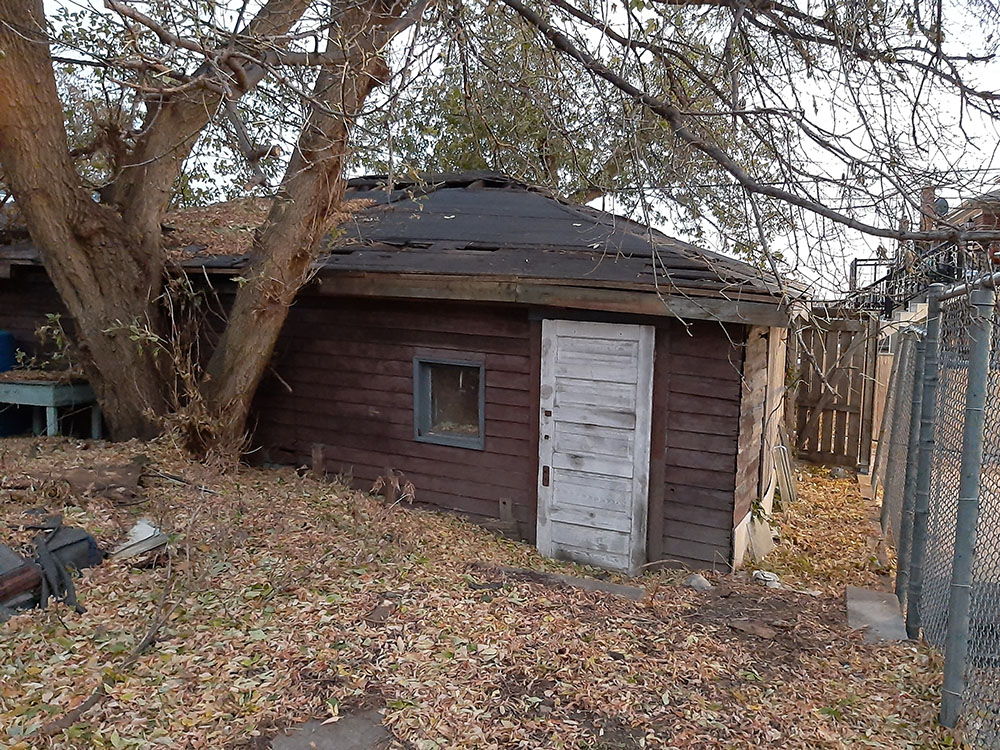
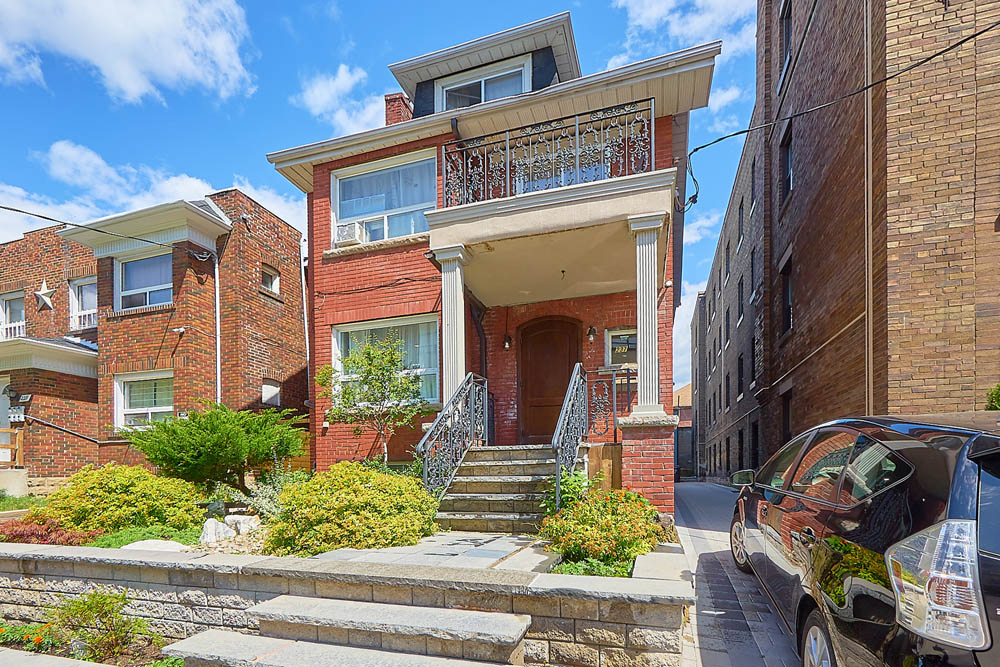
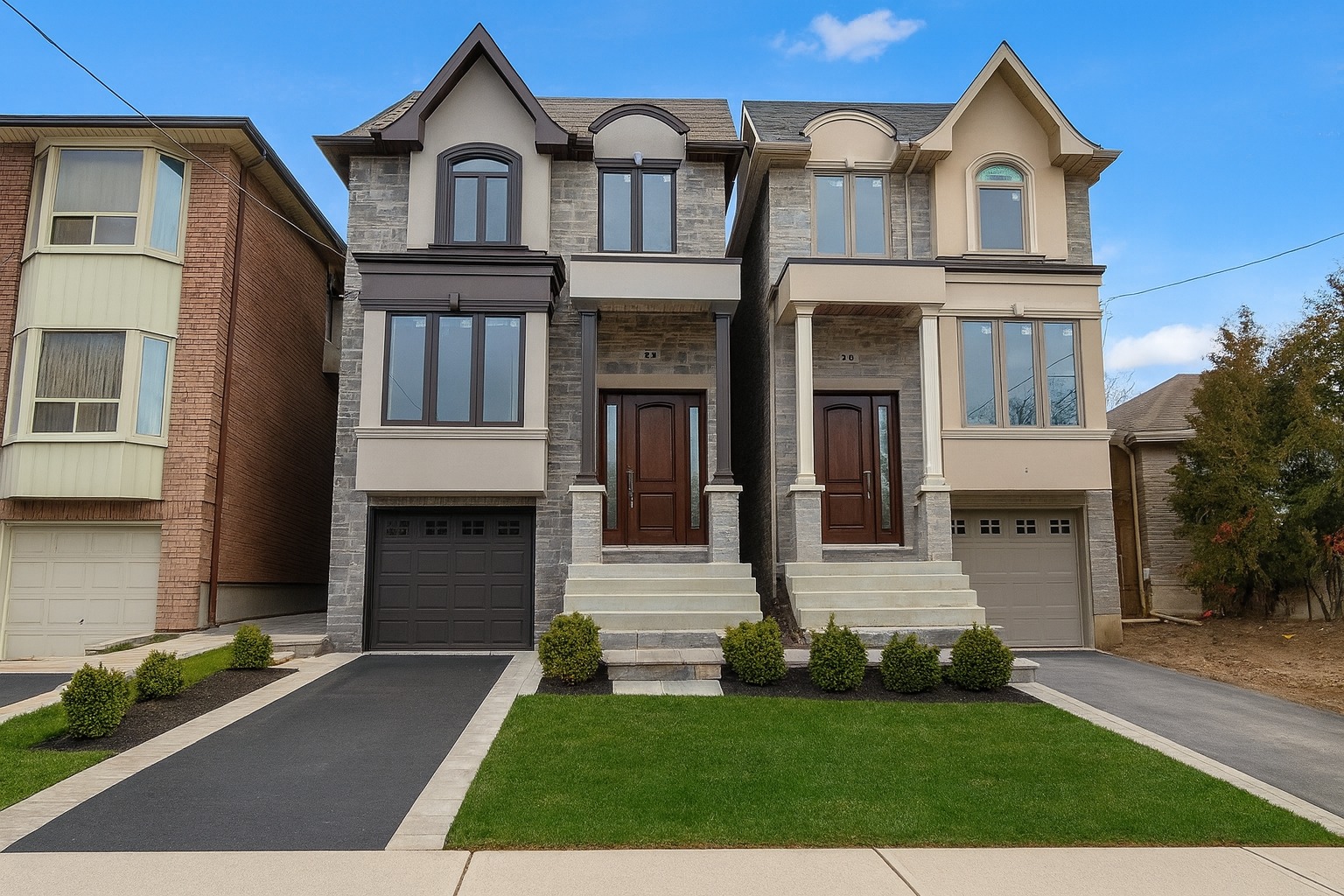
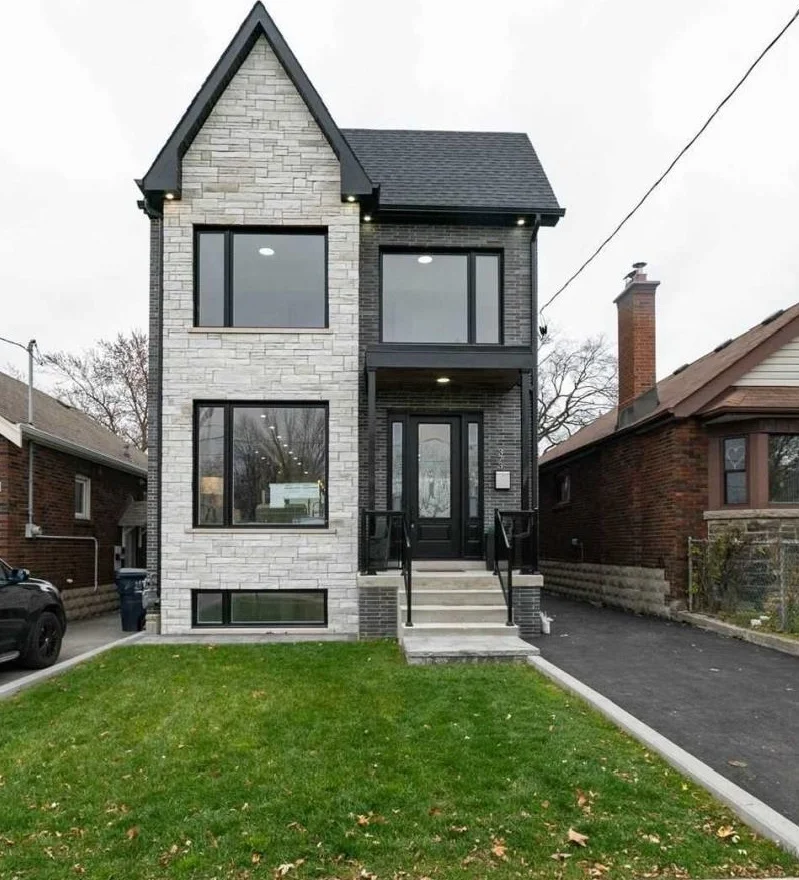
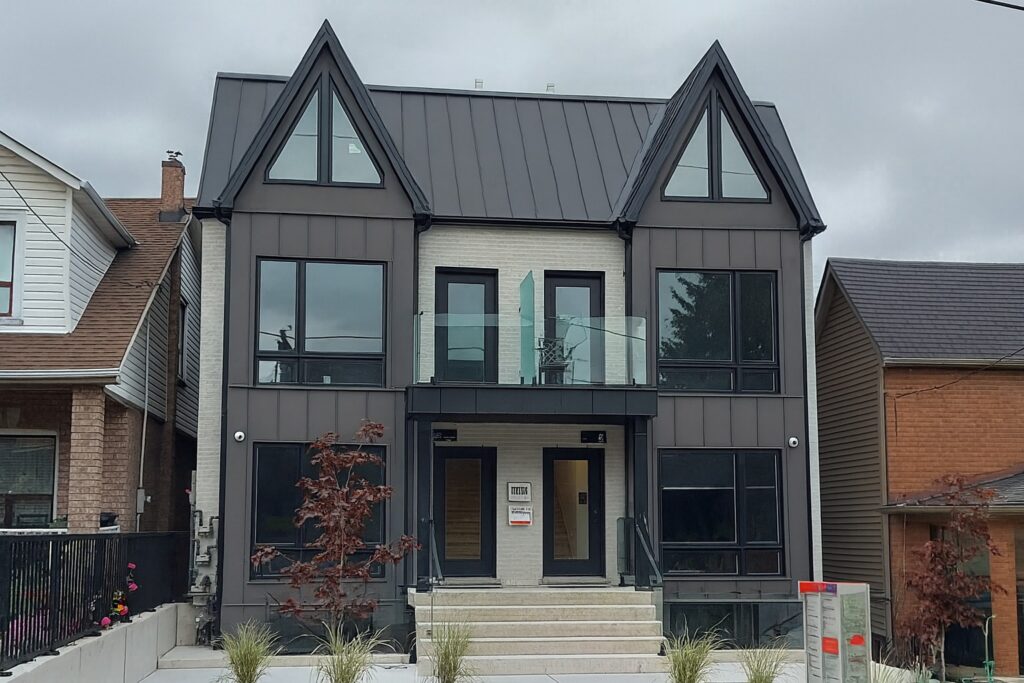
This project transformed an abandoned single-family home into two multi-family semi-detached dwellings, each with four residential units, and added two laneway houses at the rear of each lot. The redevelopment aimed to increase housing density and address urban growth demands, though it involved navigating complicated zoning, building codes, and fire safety regulations to ensure project’s successful completion.
Zoning Challenges:
The property conversion required zoning variances due to severance, multi-family use, and non-compliance with minimum lot size, frontage, setbacks, and coverage regulations. The addition of two-story laneway houses with a basement, further complicated zoning approvals, requiring relaxing certain zoning requirements such as height, setbacks, and total building coverage in order to accommodate the laneway houses within the project’s footprint.
Design Challenges:
Maximizing space efficiency while ensuring livability was a primary focus. Key considerations included:
• Efficient Layouts: Compact yet functional floor plans with open, flexible spaces. The design needed to incorporate efficient floor plans that maximized the use of each square foot without compromising comfort or livability. The challenge was careful placement of staircases, creating open, flexible spaces which required creative thinking
• Light and Ventilation: Incorporating large windows, skylights, and light wells to enhance natural light and ventilation, without sacrificing privacy
• Privacy and Acoustics: Screening elements, fences, and soundproofing ensured visual and acoustic separation between units. These elements had to be integrated in a way that not to overwhelm the limited space.
• Fire Safety: Integration of fire-rated materials, compartmentalization, and compliant egress routes.
• Sustainability: Energy-efficient systems, insulation, and mechanical design optimized for limited space.
Fire and Building Code Compliance:
Meeting fire safety codes required fire separation between units, compliant egress routes, and fire alarm systems. Further the laneway houses were also designed with specific egress requirements in mind.
.
Conclusion:
This redevelopment balanced architectural efficiency, zoning requirements, and regulatory compliance within tight space constraints. The design team employed innovative solutions while coordinating closely with city officials and inspectors to ensure smooth approvals and a successful outcome.